Crystal, cut glass or porcelain: choosing a chandelier
The same cast body takes on a different character with what is added to it. How three families of chandeliers shape light and space.
Published:
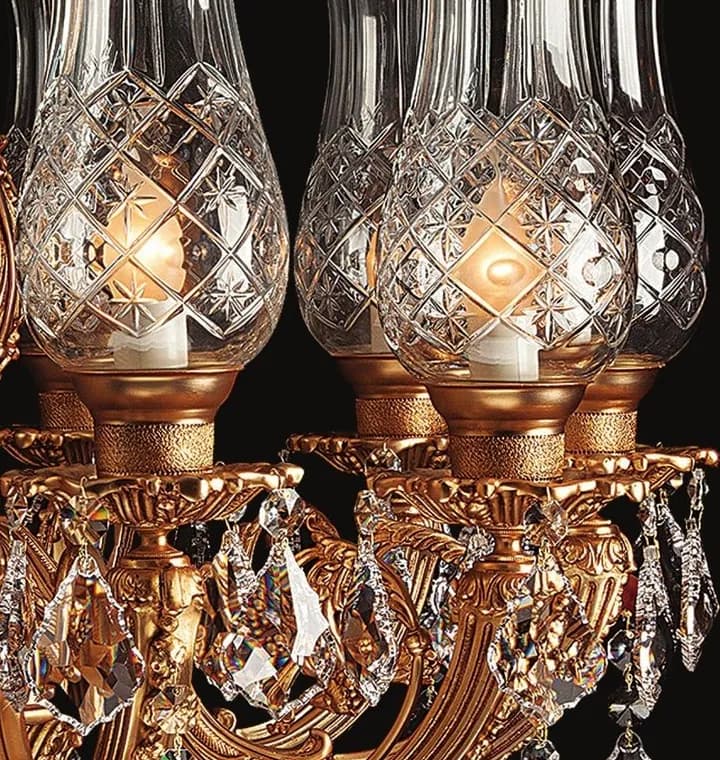
The skeleton of a classical chandelier is usually its cast metal body, arms and ornament. What tunes it to a particular room is the material added to that skeleton. That is why we group the chandeliers in our catalog into four families.
Crystal cast chandeliers
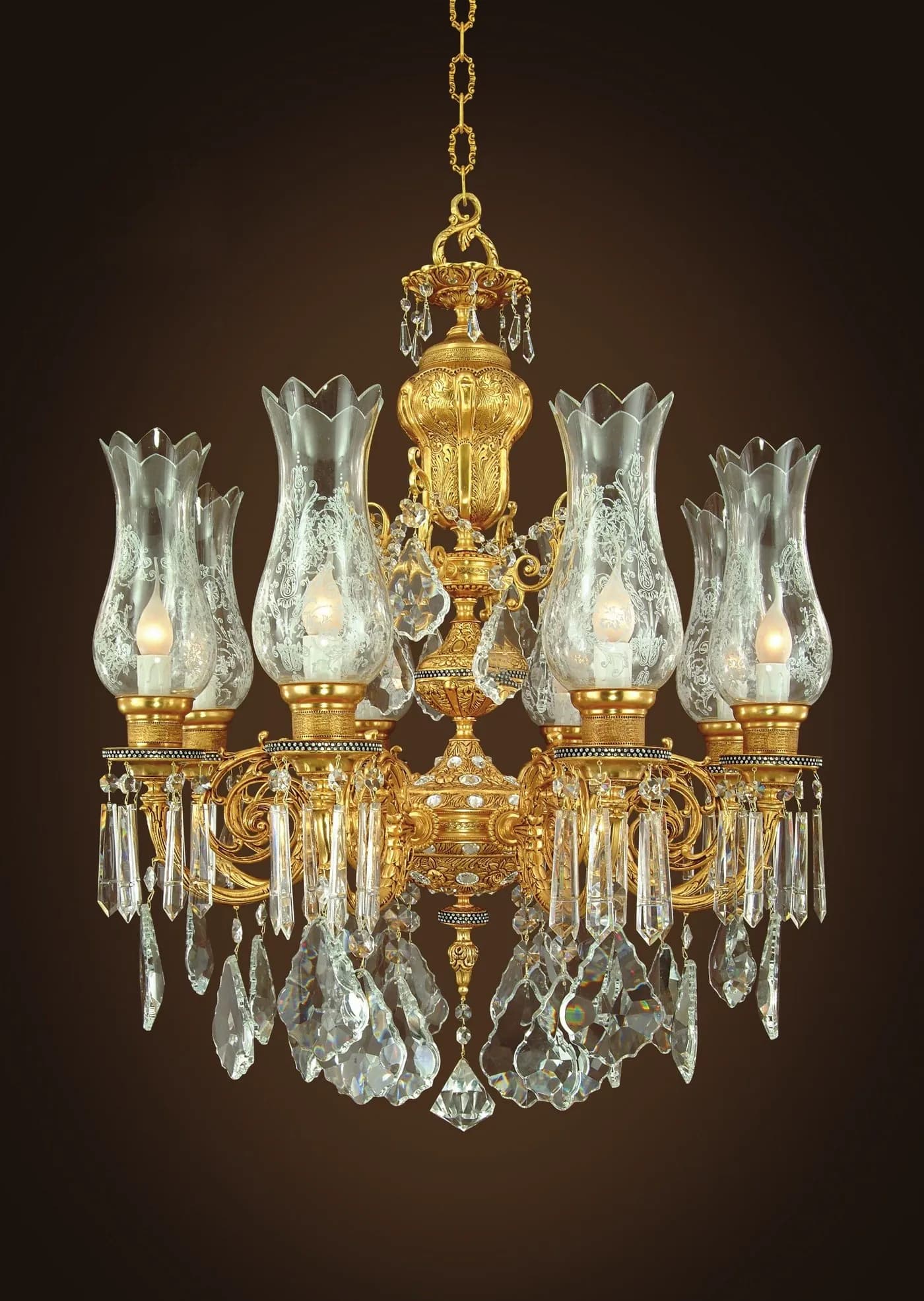
Crystal drops refract and multiply light; the light of a single bulb becomes hundreds of small sparkles. Crystal chandeliers suit entrance halls, ballrooms and tall salons where a lively play of light is wanted throughout the day.
The closer the crystal sits to the light source, the stronger the effect. Warm bulbs (2700–3000 K) keep the sparkle from turning cold and sit well with a gilded body.
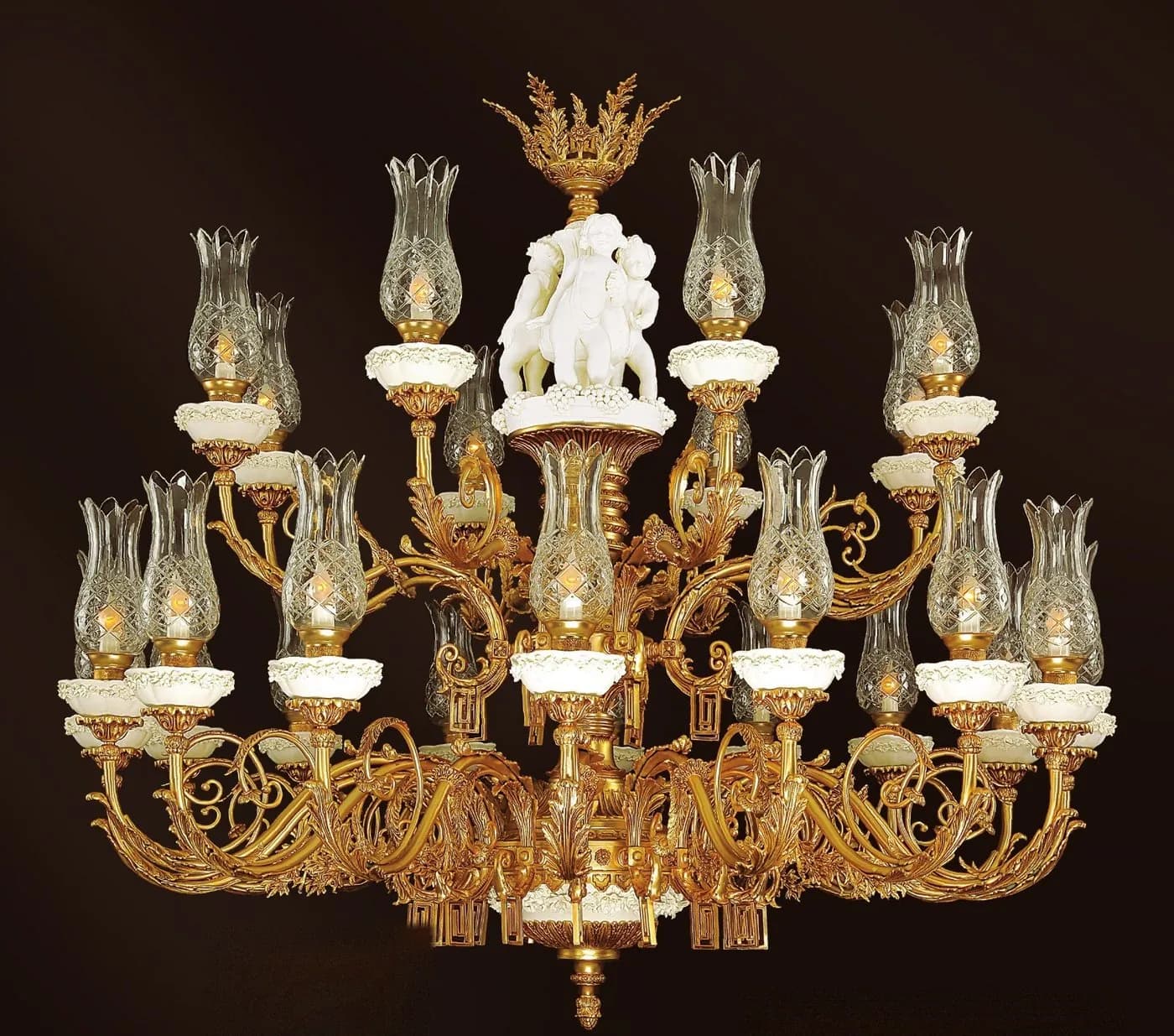
Cut-glass cast chandeliers
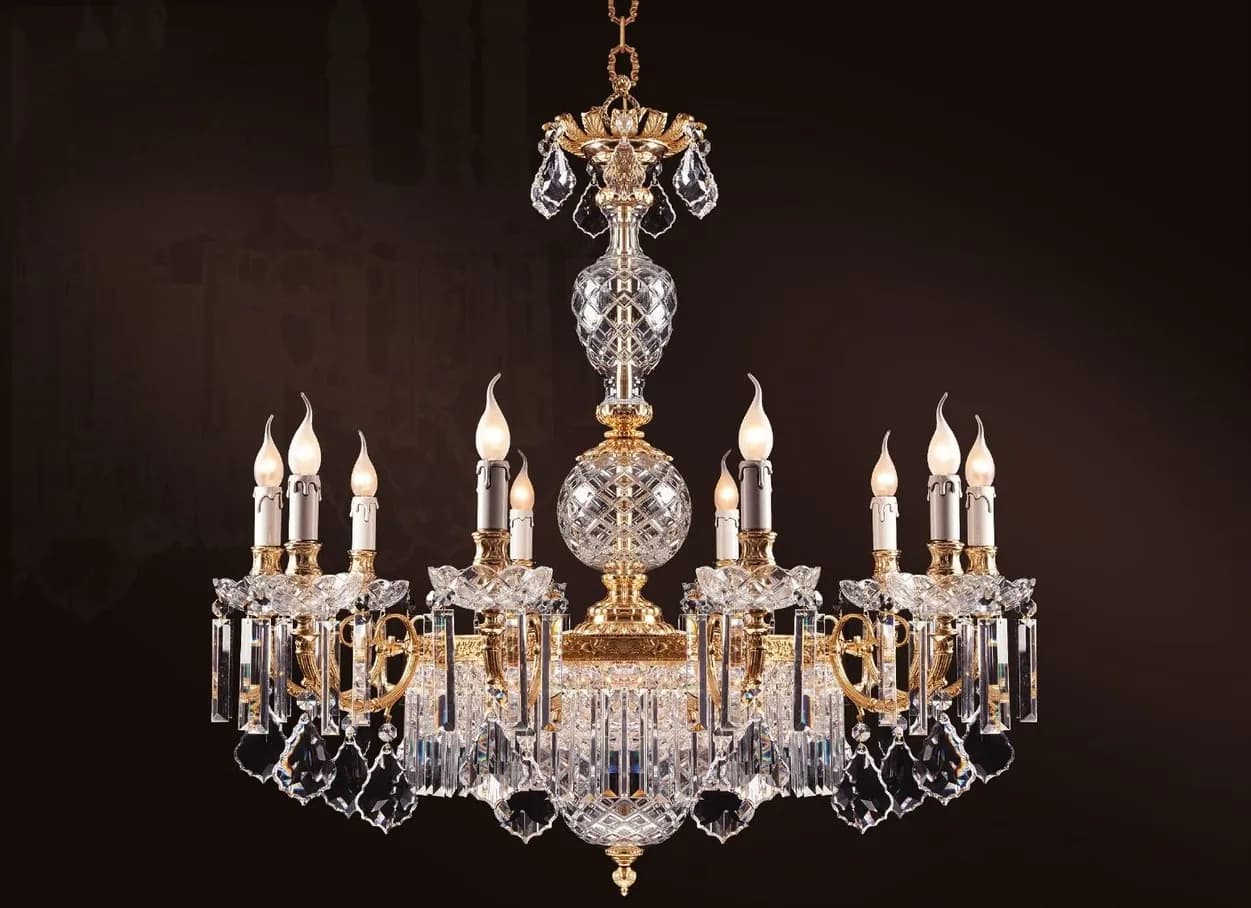
Cut-glass shades wrap the bulb and soften its light. Instead of sparkle they give a calm, diffused glow, drawing the eye to the pattern of the glass rather than to the bulb. They are a more restful choice for dining rooms, libraries and rooms where people sit for long periods.
Porcelain cast chandeliers
Porcelain bodies and arm details bring colour that metal alone cannot. White, turquoise or painted porcelain is a strong way to connect with a room’s upholstery, wallpaper or rugs. Even unlit, the chandelier stays part of the room’s decoration.
Classic cast chandeliers
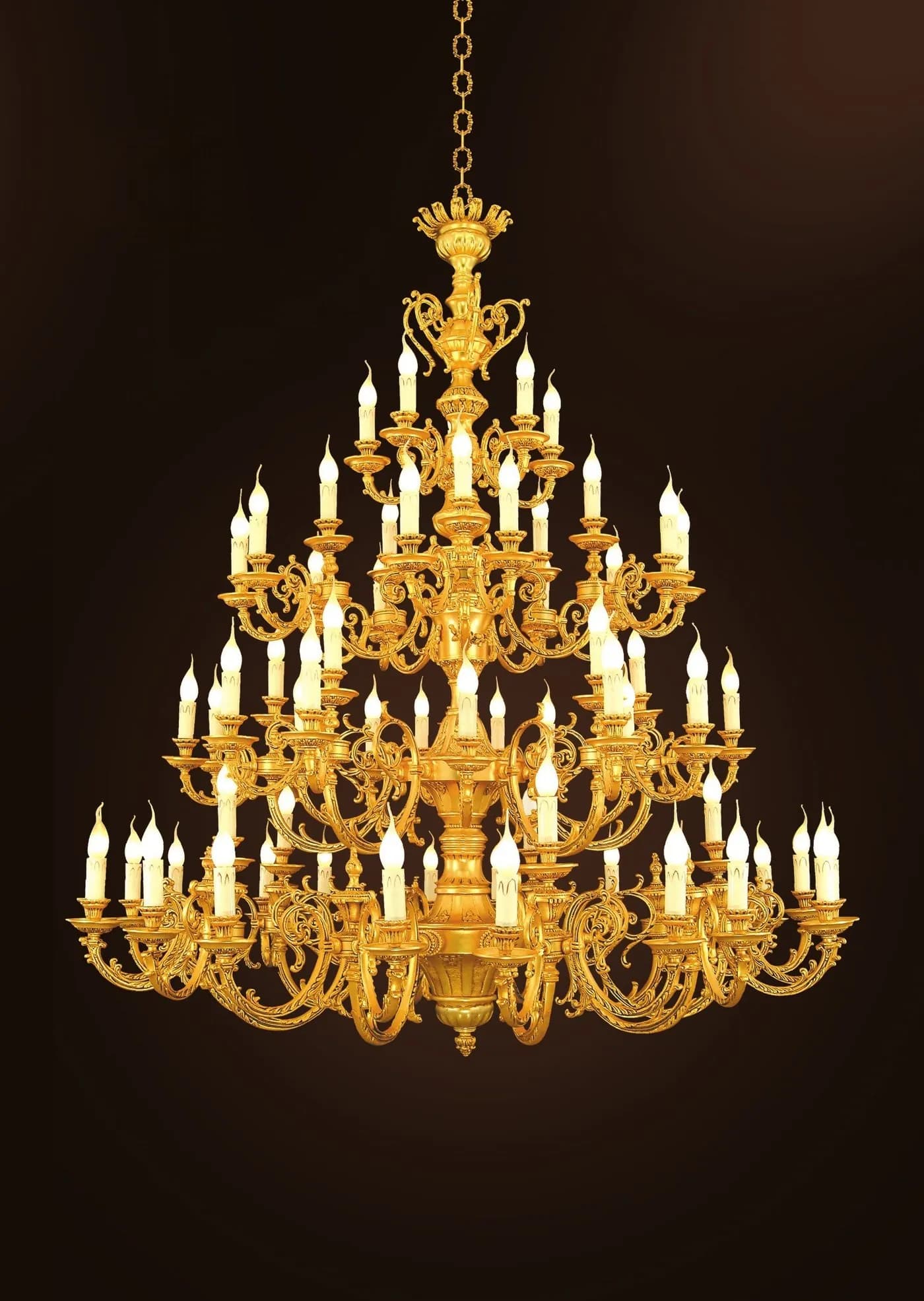
In classic candle-arm chandeliers with rich cast ornament, the metal itself leads. The light comes straight from the bulbs, so they work best in layered rooms with plain ceilings, where the chandelier’s silhouette should read clearly.
Which for which room?
- Tall entrance, ballroom, hotel lobby: crystal cast
- Dining room, library, long-stay living room: cut-glass cast
- Richly coloured salon, bedroom, boutique hotel room: porcelain cast
- Pared-back architecture where the silhouette matters: classic cast
Families can be mixed within a project — a crystal piece in the hall and the cut-glass version of the same series in the dining room, for example. If you are unsure, share photographs of the space with us.